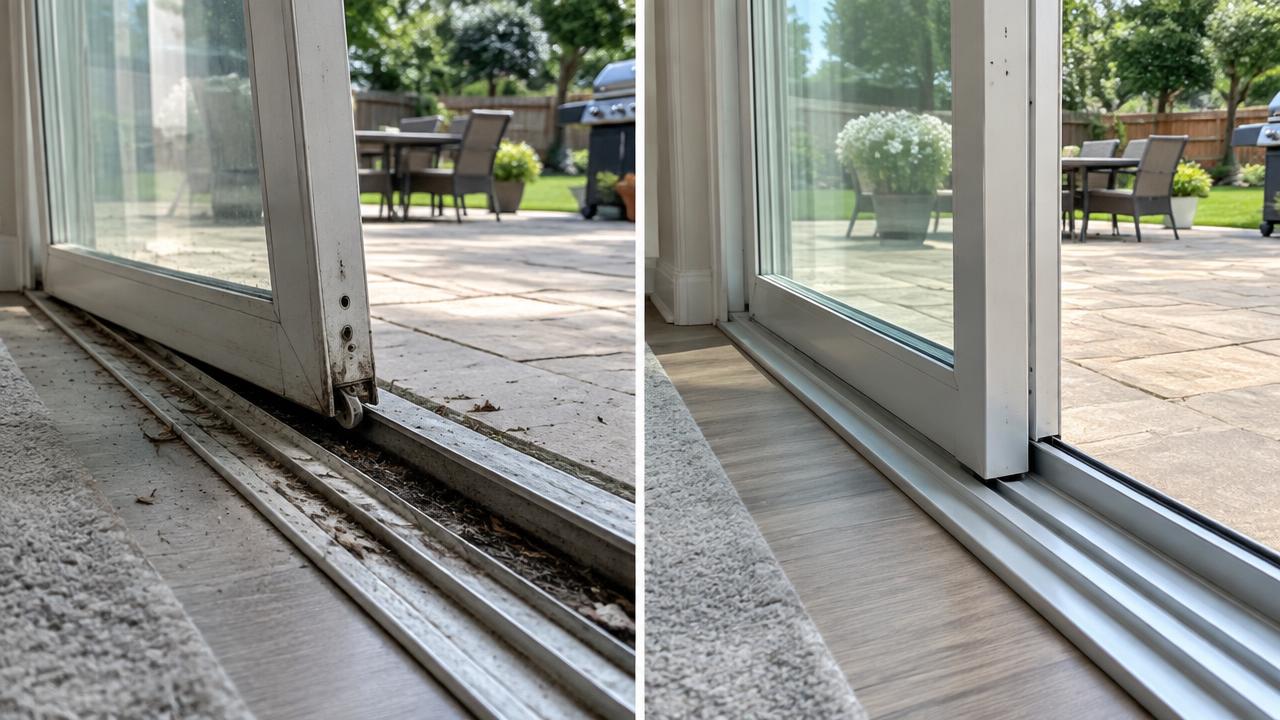
A patio door should glide with one finger. When it needs a shoulder, something underneath has failed. There are only a handful of causes, and most of them are repairable in a single visit without touching the glass.
Worn or seized rollers
Rollers carry the entire weight of the panel on two small wheels. Once the bearings dry out or a wheel flat-spots, the panel drags on its frame instead of rolling. You can often hear it — a grinding sound rather than a hum. Replacement rollers are matched to the door manufacturer and installed by lifting the panel out of the track.
A damaged or dirty track
Grit, pet hair and salt from winter boots pack into the track and act like sandpaper. Worse, a bent aluminum track lip will stop a roller dead. Light damage can be dressed and capped with a stainless track cover; heavy damage means replacing the sill track.
Rollers out of adjustment
Most patio doors have two adjustment screws behind small plugs at the bottom edge. Raising or lowering each side squares the panel to the frame. Getting this wrong is why a door latches but still scrapes.
A frame that has settled
If the gap between panel and frame is wide at the top and tight at the bottom, the opening itself has moved. Shimming the frame back to square is the real fix — new rollers alone will just wear out again.
What you can try before calling
- Vacuum the track, then wipe it with a dry cloth — no oil, which collects grit
- Use a dry silicone spray on the track only
- Check that the security bar or foot lock isn't dragging
- Look for a screw plug at the bottom corners and see if the panel is sitting low