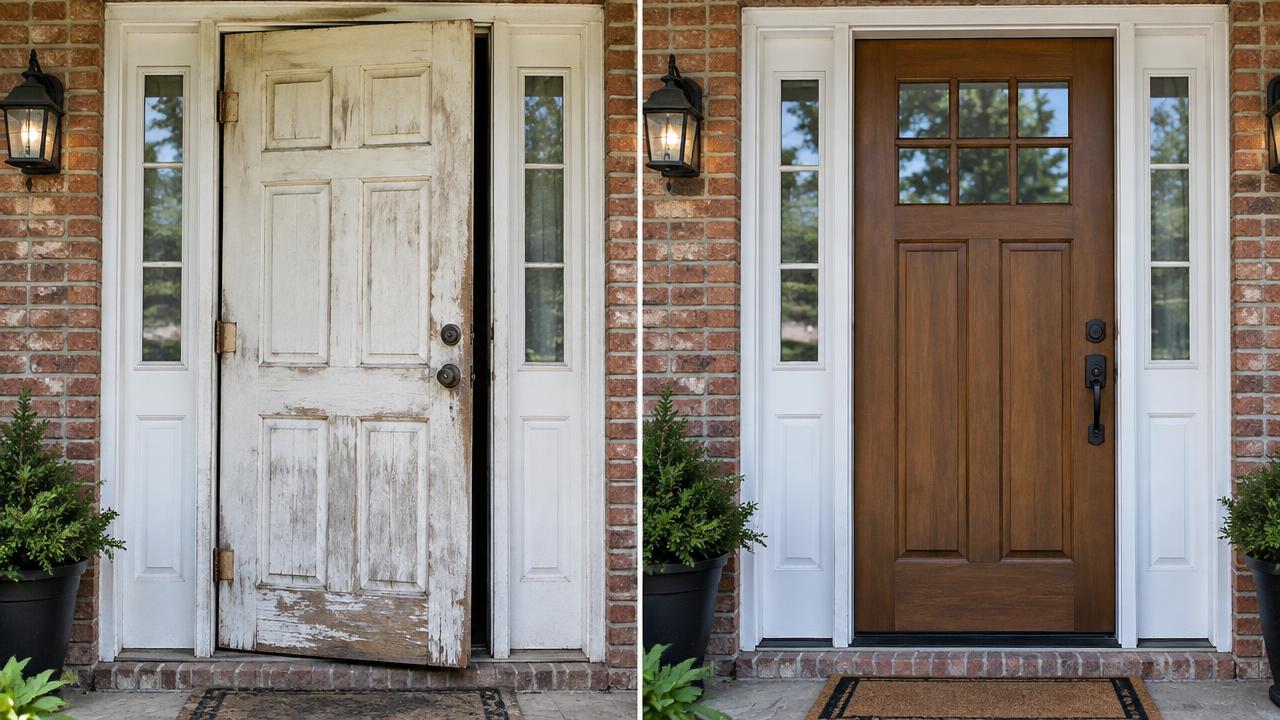
A front door that drags, rattles or refuses to latch feels like a big-ticket problem. In most homes it isn't. The slab and frame are usually fine; what has moved is the hardware, the hinges or the frame's alignment. Here is how to tell the difference before anyone quotes you a full replacement.
1. The door catches at the top corner
A door that rubs on the top latch-side corner has almost always sagged on its hinges. Tightening the top hinge screws into the framing — often with longer screws that reach the stud rather than just the jamb — pulls the slab back into square. This is a repair measured in minutes, not a replacement.
2. The latch hits the strike plate instead of entering it
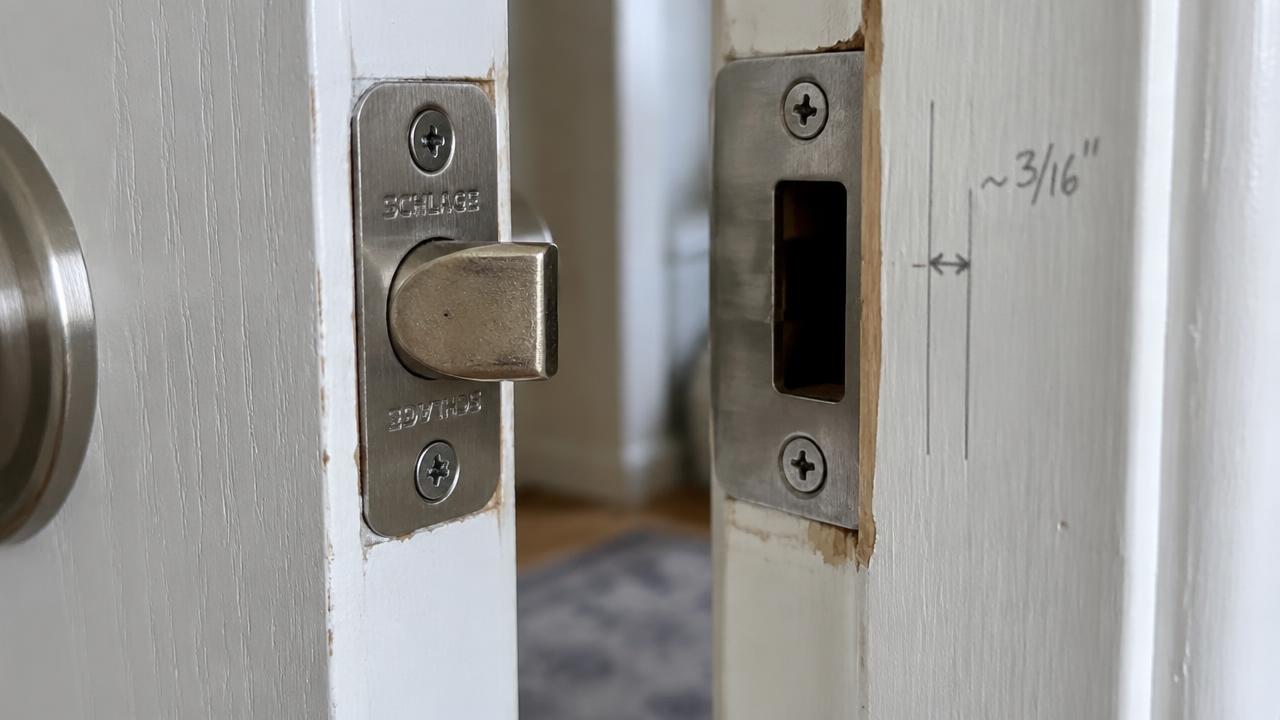
You can see the witness mark: a bright scratch above or below the strike hole. Moving the strike plate a few millimetres, or filing the opening, restores the latch. If the deadbolt no longer lines up either, the whole door has shifted and the hinge side needs attention first.
3. Daylight around the edges
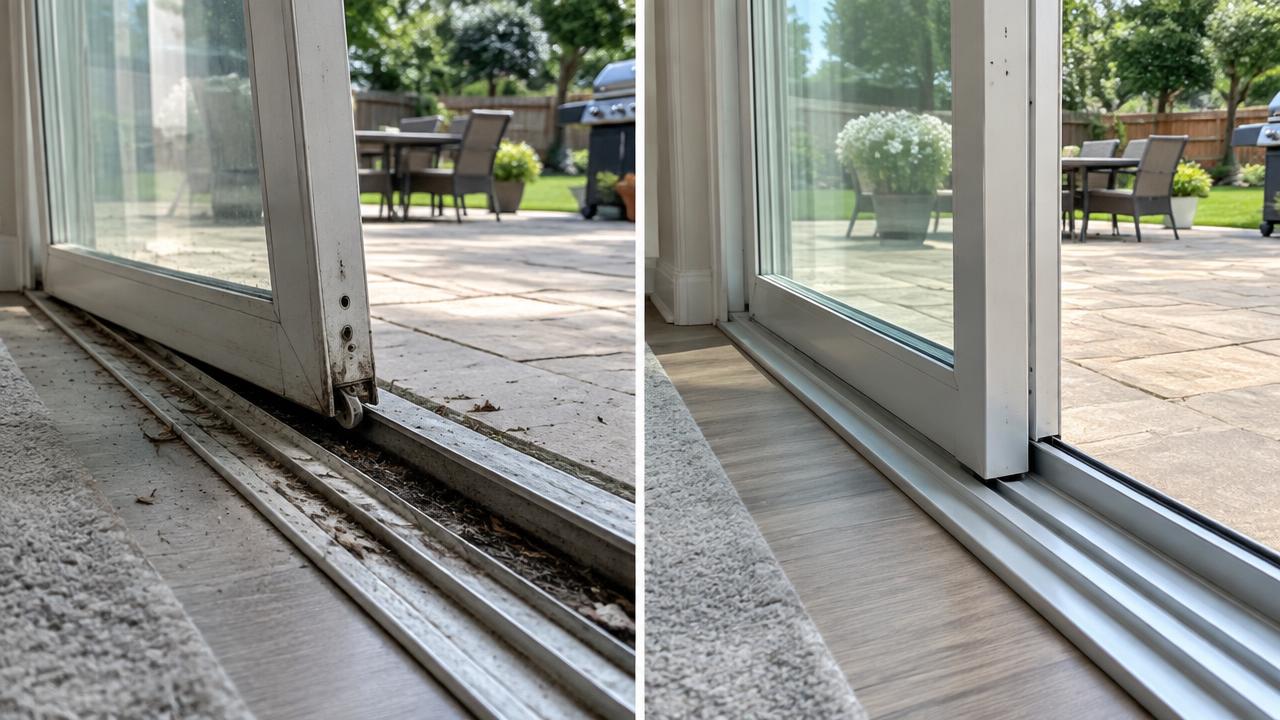
Light at the sides usually means worn weatherstripping. Light along the bottom means the sweep has hardened or the threshold has dropped. Both are replaceable parts sized to the door you already have.
4. The door swings open or closed on its own
That's a plumb problem, not a door problem. The frame is leaning slightly. Shimming behind a hinge is the standard fix.
5. Handle wobble or a spongy deadbolt
Loose spindles, worn cylinders and stripped screw bosses are hardware wear. New hardware in the existing prep holes solves it, and it is a good moment to rekey while the cylinder is out.
6. Swelling that changes with the season
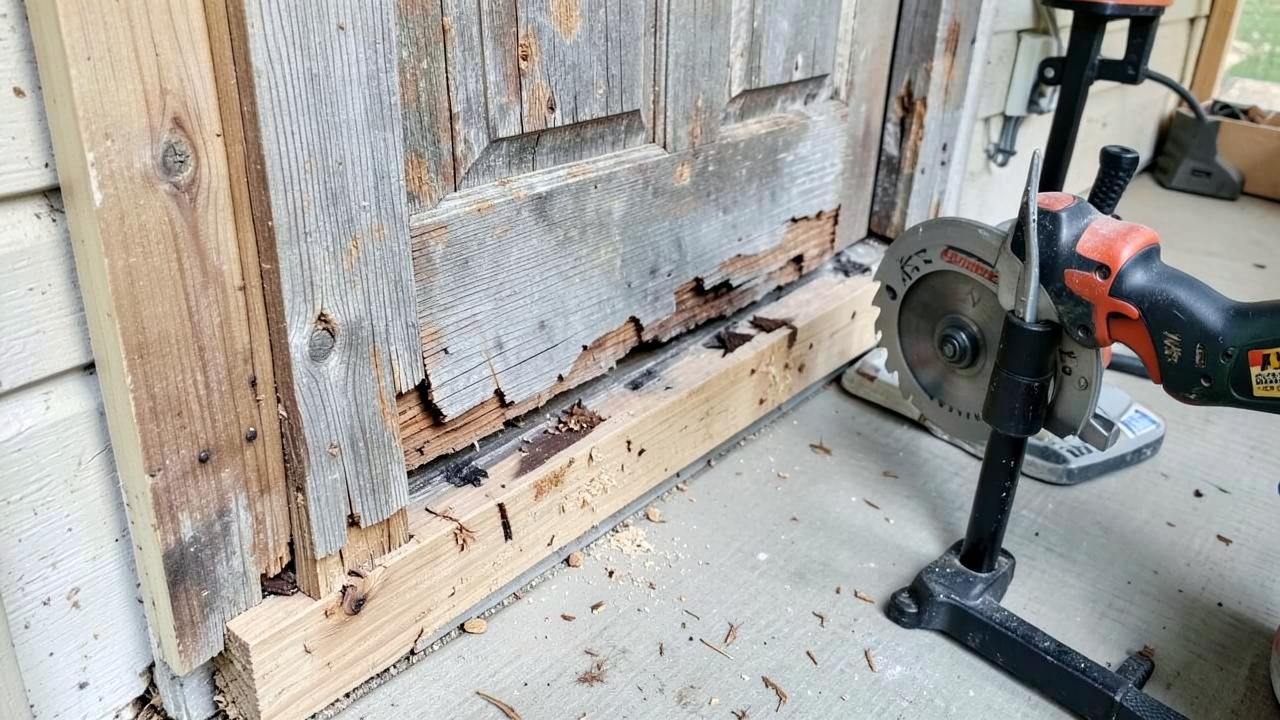
A wood door that sticks in July and clears in January is absorbing moisture through unsealed edges. Planing the binding edge and sealing all six sides — including top and bottom — stops the cycle.
7. Surface damage without structural damage
Dents in a steel skin, a scuffed finish or a cracked glass insert are cosmetic or component-level. Inserts and glass lites come out and go back in without touching the slab.
When replacement genuinely is the answer
- The slab is delaminating or the core is soft and wet
- The frame is rotted through at the bottom of the jambs
- The door was forced and the stile is split along the lock bore
- The opening was never square and the door has been shimmed to its limit