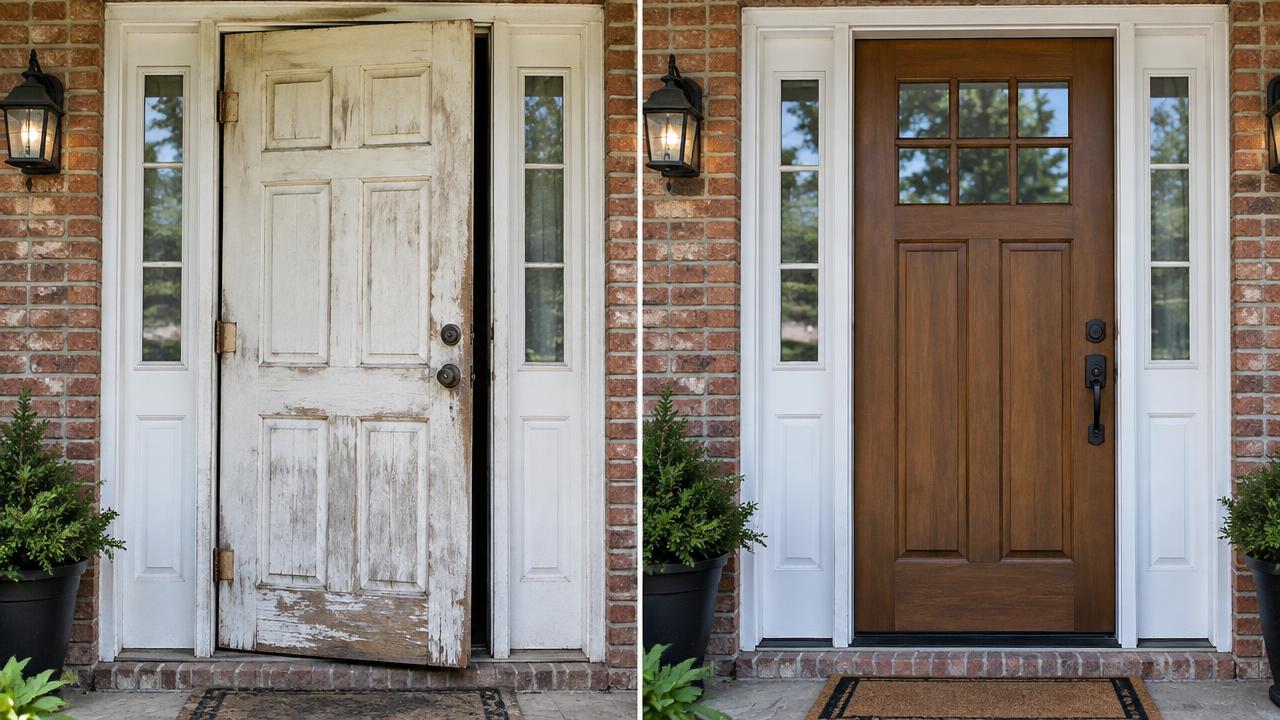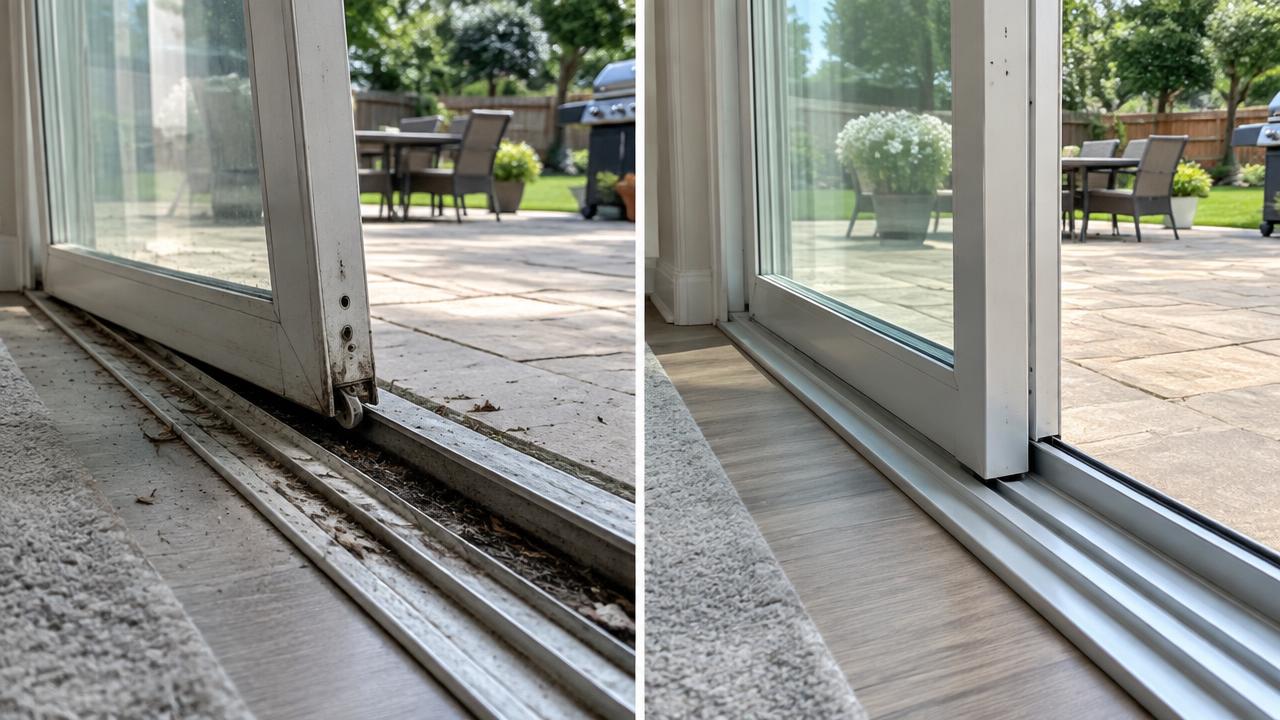
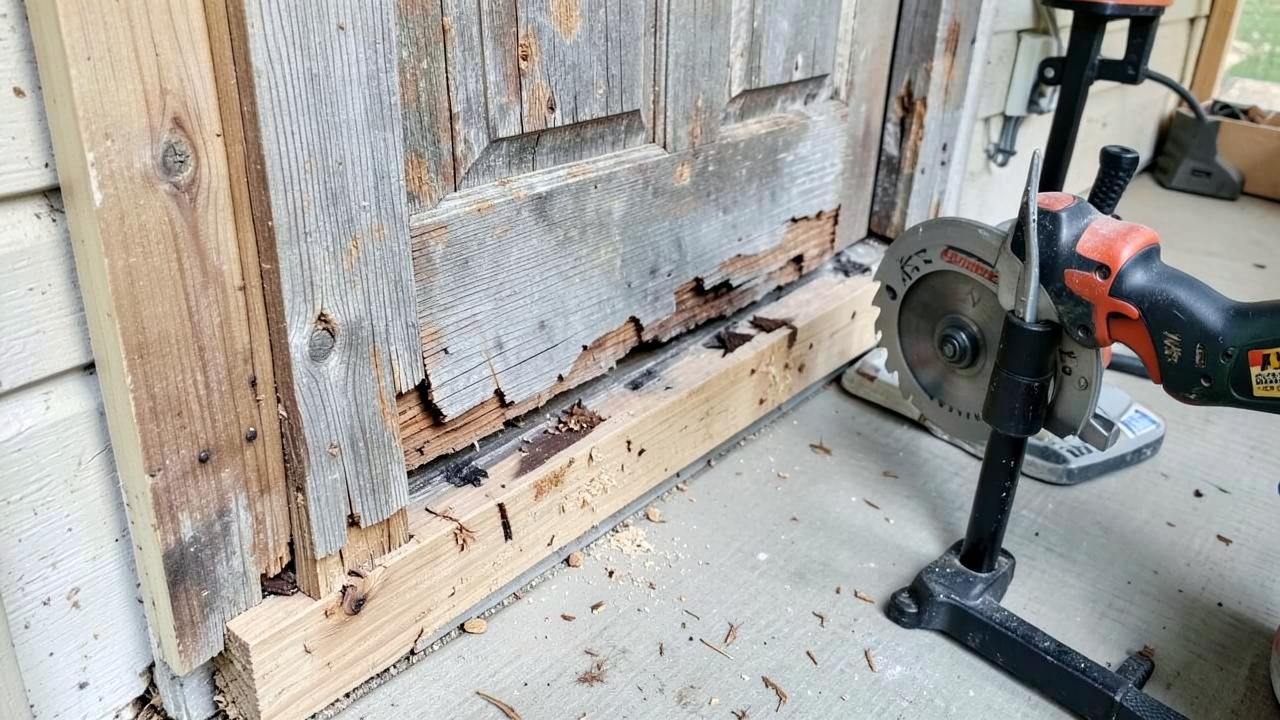
Door frames fail from the bottom up. Water runs down the slab, sits at the base of the jamb, and the last few inches go soft years before anyone notices. The question is always the same: how far up does the damage go?
Test the jamb before you decide
Press a screwdriver into the jamb at floor level, then at 100 mm, 200 mm and 300 mm up. Where the tip stops sinking, the sound wood begins. Damage confined to the bottom 200 mm is a classic candidate for a jamb-leg splice: cut out the rotten section, scarf in matched material, prime and seal.
Kick-in and forced-entry damage
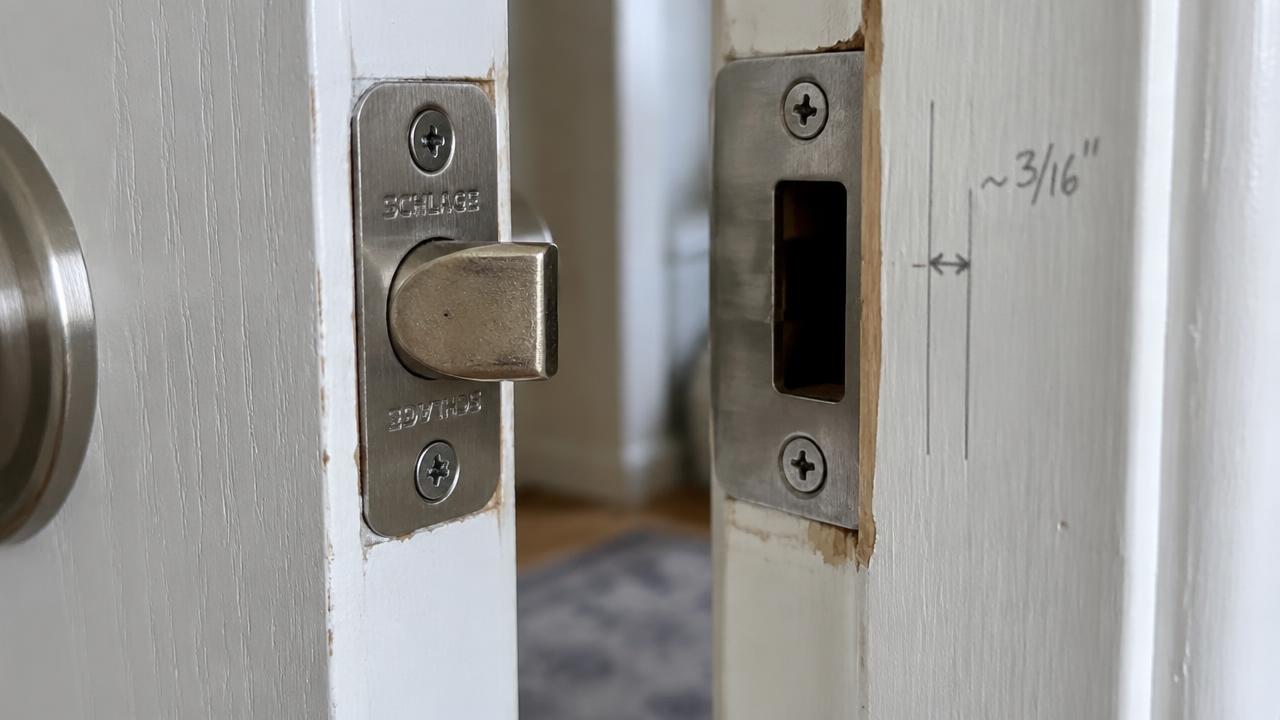
Forced entry splits the jamb along the strike side. If the split is clean and the wood is sound, glue, clamp and reinforce with a full-length security strike is stronger than the original. If the jamb is shattered, replace the leg.
When to replace the whole frame
- Rot has reached the head or crosses the hinge mortises
- The frame is out of square enough that the door needs constant readjustment
- The exterior brickmould and sill are gone as well as the jamb
- You're changing door size, swing or adding a sidelite anyway
Stop it happening again
Most repeat rot comes from the same three sources: a threshold that no longer sheds water, missing caulk where the brickmould meets the cladding, and downspouts discharging beside the step. Fixing the frame without fixing the water is a temporary result.