Exit hardware exists so that anyone can leave a building in a panic, in the dark, without knowing how the door works. Every requirement around it follows from that one idea.
How an exit device works
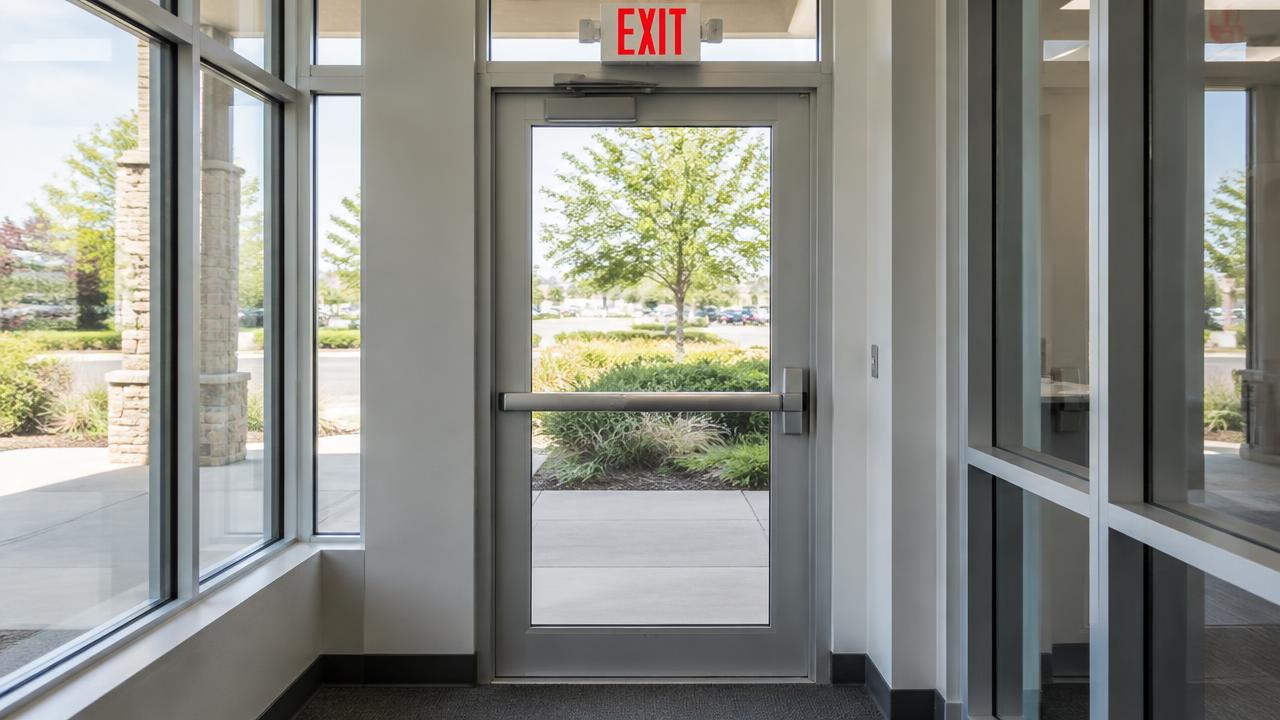
Pushing anywhere along the bar retracts the latch. No knob, no thumbturn, no key, no second action. Rim devices latch to a surface strike, mortise devices into the frame, and vertical rod devices latch top and bottom on pairs of doors.
The violations we see most
- A padlock, chain or slide bolt added to an exit door
- Storage stacked in front of an exit or in the path to it
- A device that has to be shoved hard or hit twice to release
- Exit signage or emergency lighting that no longer works
- An electrified device that fails locked instead of releasing
Fire-rated doors
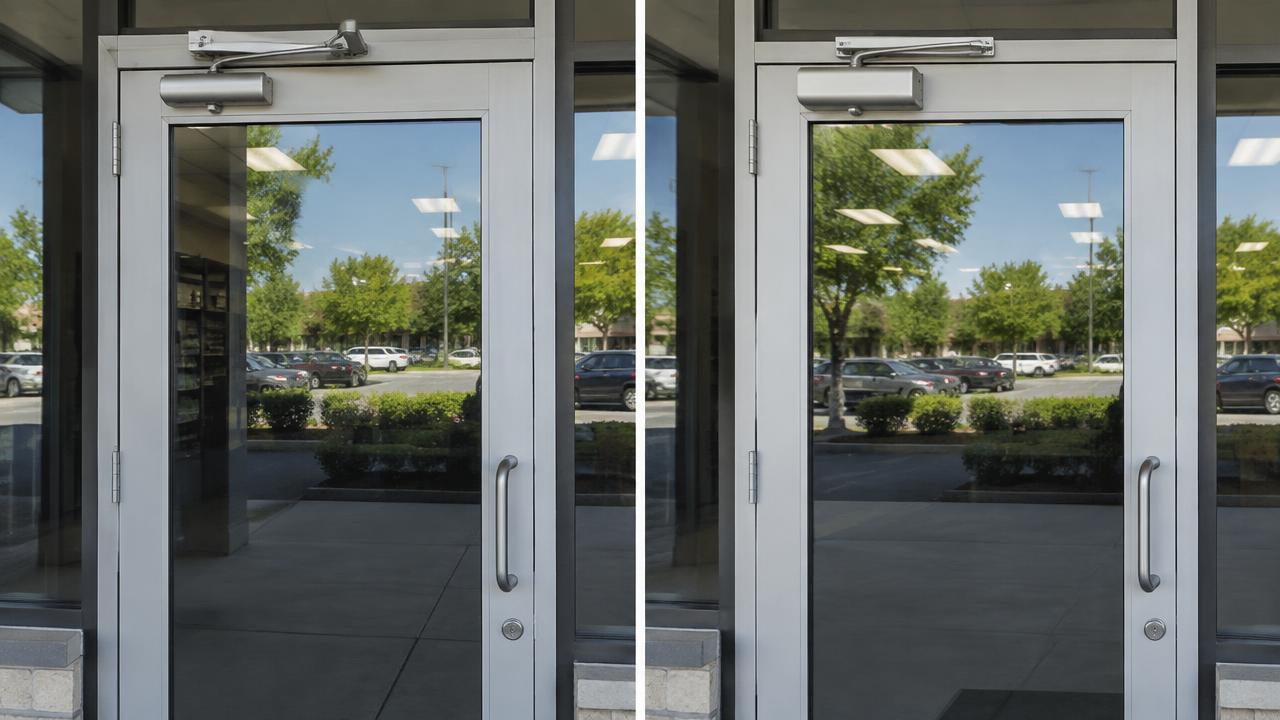
A fire door assembly is rated as a whole — door, frame, hardware and closer together. Substituting non-rated hardware, removing the closer or wedging the door open defeats the rating. Fire-rated exit devices also latch positively, which is why they can't simply be swapped for a push-pull set.
Delayed egress and access control
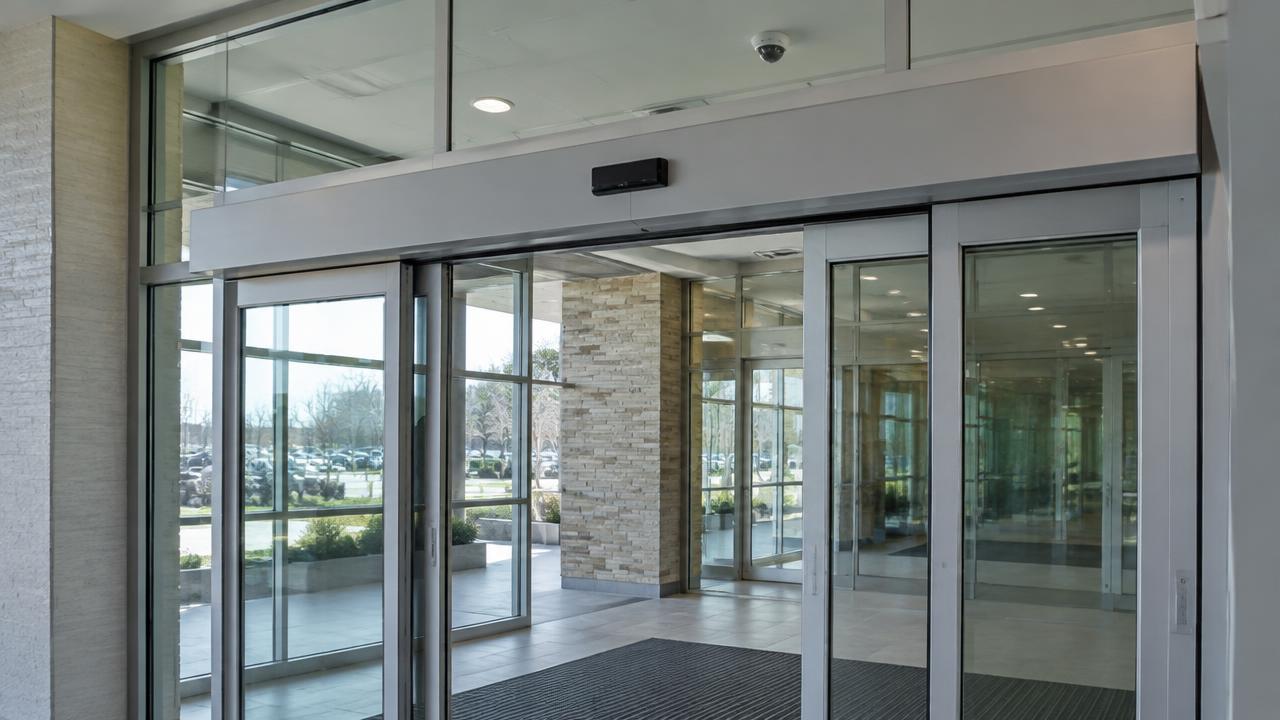
Access control on an exit door is allowed only where the exit function is preserved. Electric strikes, maglocks and delayed-egress arrangements each have their own conditions. When we install access control on an exit, the free-egress path is designed in from the start.
Your own walkthrough
Once a month, walk every exit from the inside as a customer would: push the bar with one hand, confirm the door swings fully, confirm the path outside is clear. Log it. Problems found this way are cheap; problems found by an inspector are not.