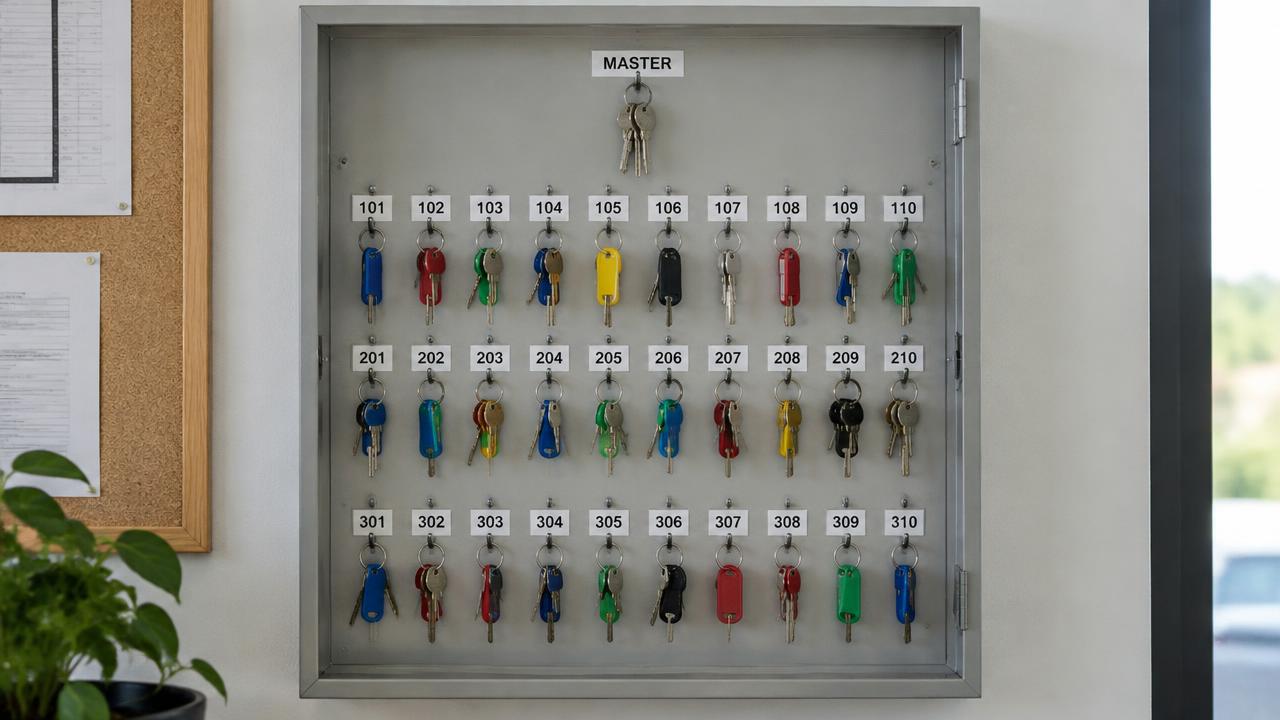
If your staff carry four keys each and you carry eleven, you don't need more locks — you need a key system. Master keying lets one key open everything while each individual key opens only what it should.
The basic structure
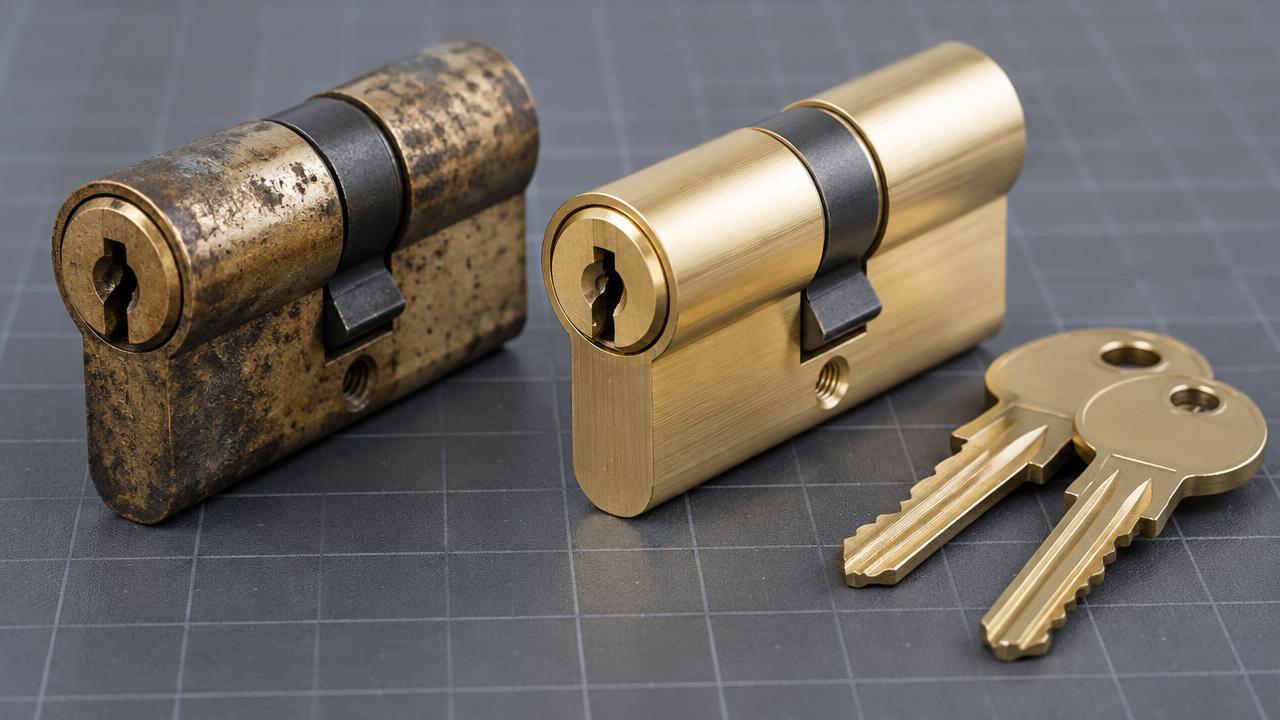
Each cylinder is pinned so that two different keys will turn it: the change key for that specific door, and the master key. Larger systems add sub-masters — a key that opens one department or one floor but not the rest of the building.
Plan the hierarchy before anything is cut
- List every door, including storage, mechanical rooms and exterior gates
- Decide which roles need access to which groups of doors
- Leave room for doors you'll add later
- Decide who holds the master and how that's recorded
Key control is the whole point
A master system is only as strong as its weakest copy. Restricted or patented keyways mean blanks aren't available at a hardware store and copies can only be authorised by you. Without that, a departing employee can walk out with a duplicate.
When access control is the better answer
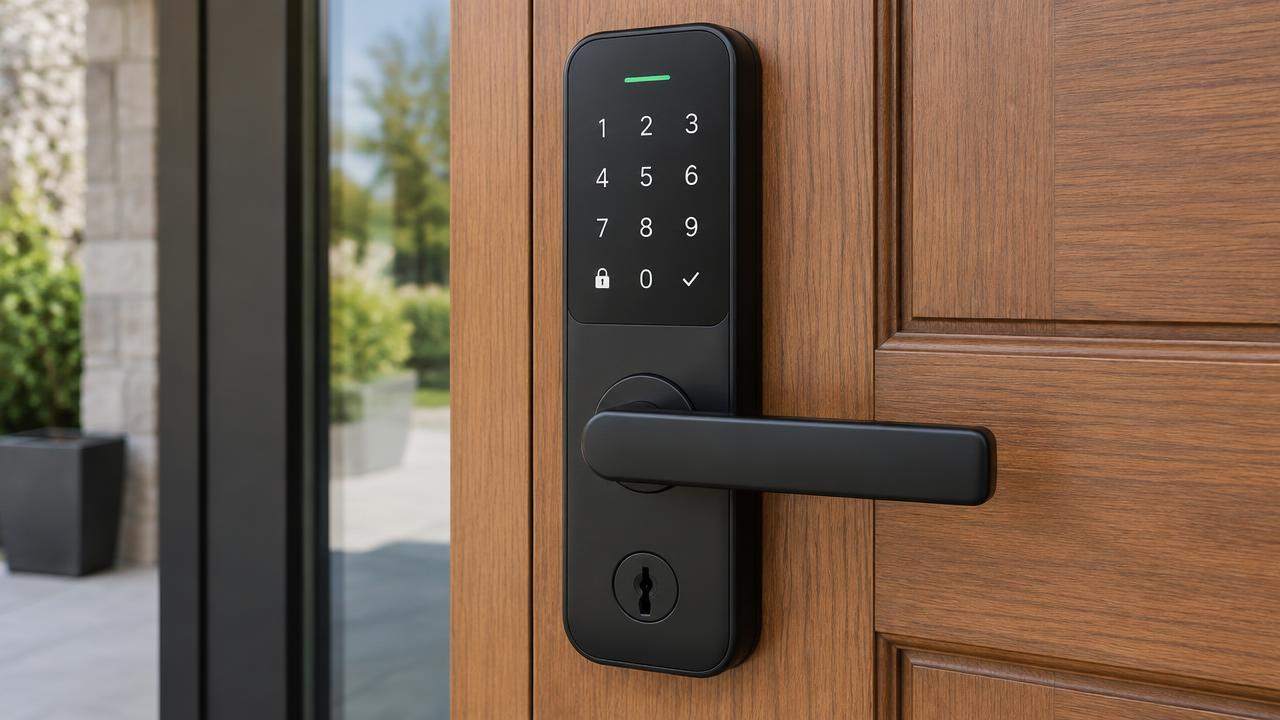
High staff turnover, doors you want to schedule, or a need to know who opened what and when — those are jobs for cards or fobs, not keys. Many businesses run both: access control on main entrances, master keys on interior doors.