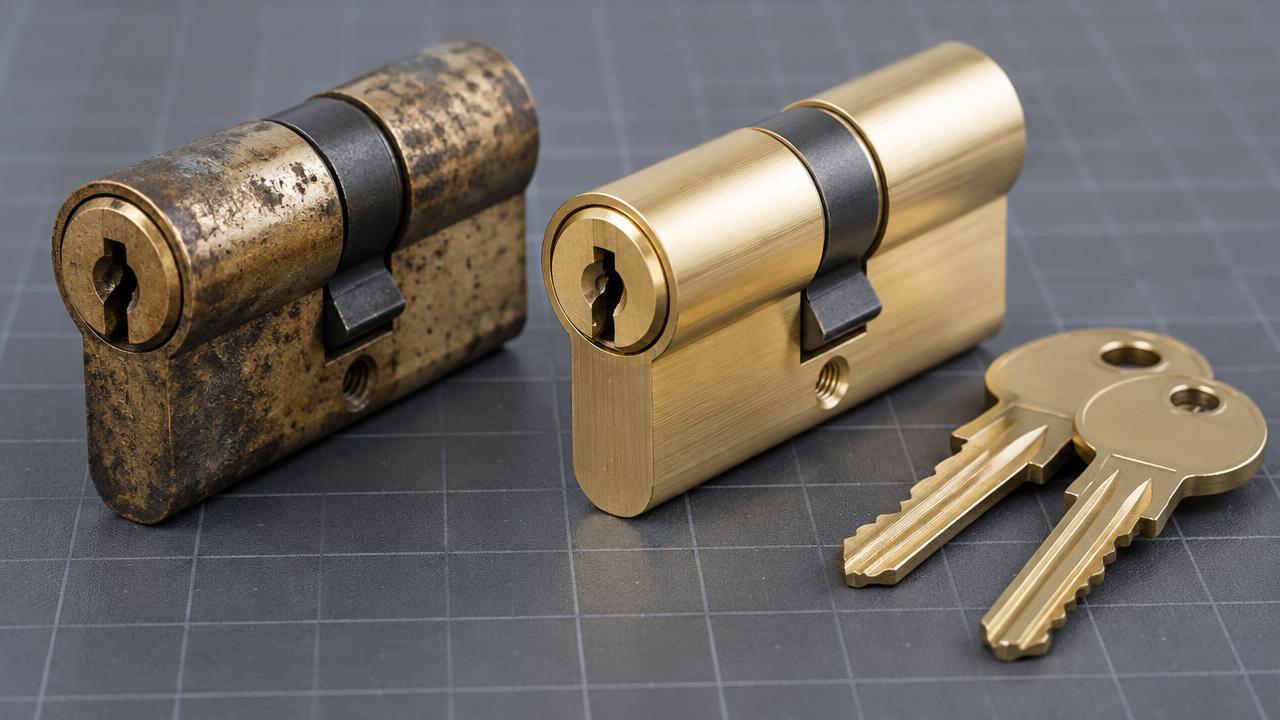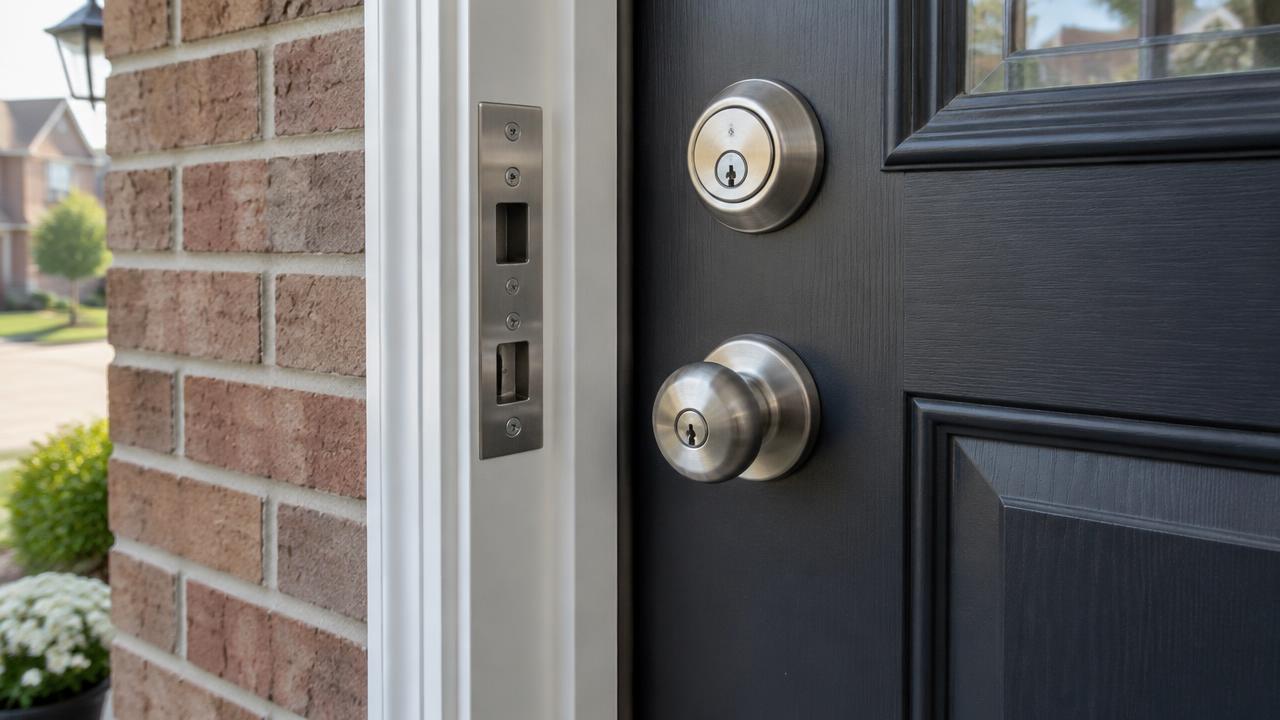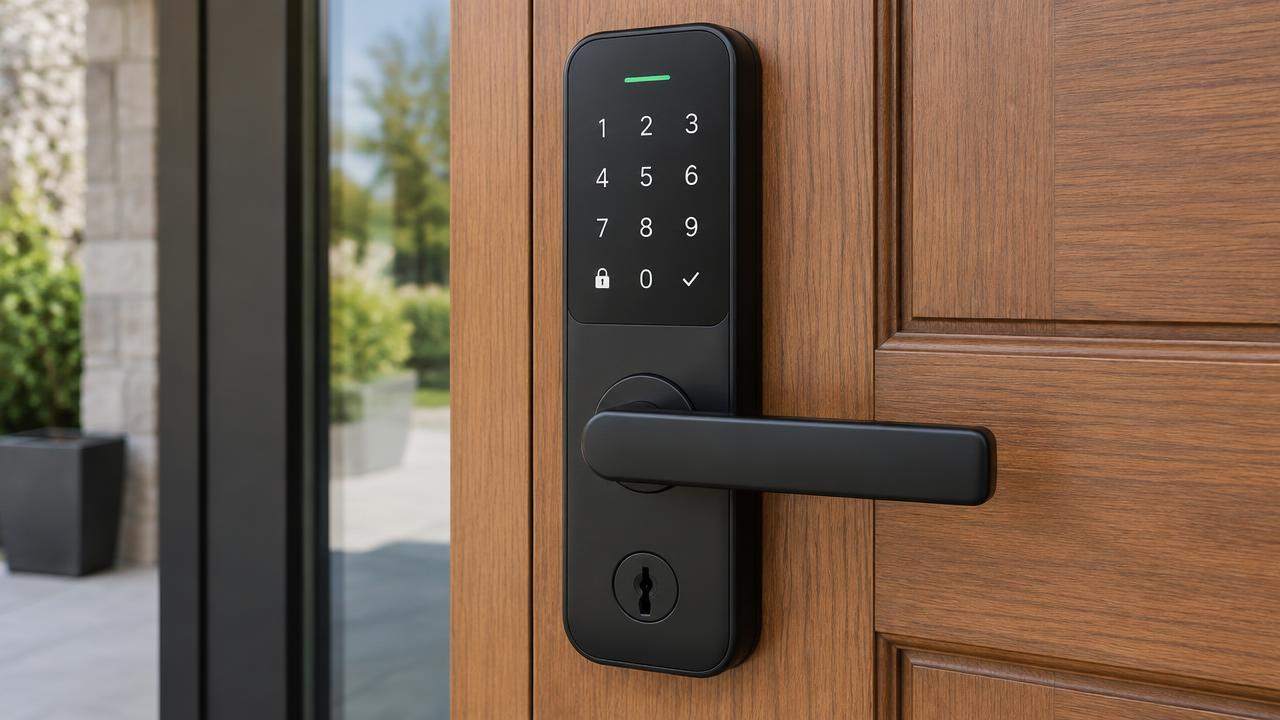
Lock packaging talks about grades, and the grade does mean something — but it measures durability and force resistance under test conditions, not how the lock performs in a frame with three short screws holding the strike.
What the grades cover
Grading systems rate locks on cycles of operation and on resistance to force. The highest grade is intended for commercial traffic, the middle grade suits heavy residential and light commercial use, and the lowest is basic residential. For a front door, the middle grade or better is a sensible floor.
Throw length
A deadbolt should throw a full inch into the frame. A short throw sits barely inside the strike and can be levered out. Check this after installation, with the door closed — not on the bench.
Single vs double cylinder
A double-cylinder deadbolt needs a key on both sides, which stops someone reaching through broken glass — but it also means you need a key to get out. Consider fire escape carefully, and where glass is the concern, laminated glass is often the better answer.
The bit that actually decides the outcome
- A reinforced strike plate with screws reaching the framing
- A solid-core or steel door rather than a hollow slab
- A frame in good condition with no rot at the strike
- Correct alignment so the bolt throws fully every time