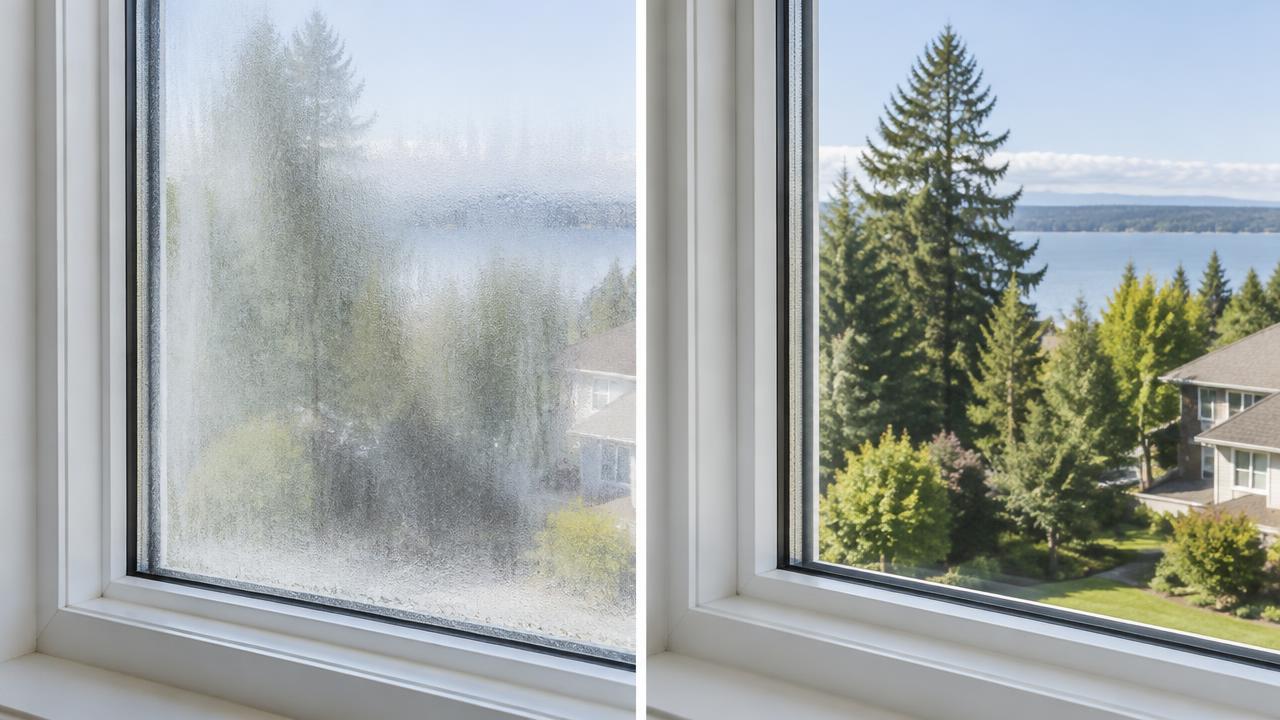
Haze you can't wipe off is trapped between two panes of glass. That space is supposed to be sealed and dry. Once the perimeter seal fails, humid air gets in, condenses on cooling, and leaves mineral staining behind.
What actually failed
A sealed unit is two or three panes bonded to a spacer filled with desiccant. Heat cycling flexes that seal thousands of times a year. When it splits, the desiccant saturates and the unit stops insulating properly — you lose the argon fill and much of the thermal benefit long before you can see fog.
The glass gets replaced, not the window
In most windows and doors the sealed unit is a removable component. We measure the unit's width, height, thickness and spacer, confirm coatings such as low-E, and fit a new unit into the existing sash. The frame, hardware and finish stay exactly as they are.
When the frame has to come into it
- The sash itself is warped or the glazing bead is broken
- The window is a fixed unit glazed into a wood frame with no removable stops
- Water has damaged the sill below the unit
Is it worth doing?
Beyond appearance, a failed unit leaks heat and can drip onto the sill in cold weather. If the window hardware and frame are sound, replacing the glass restores performance for a fraction of a whole-window job.