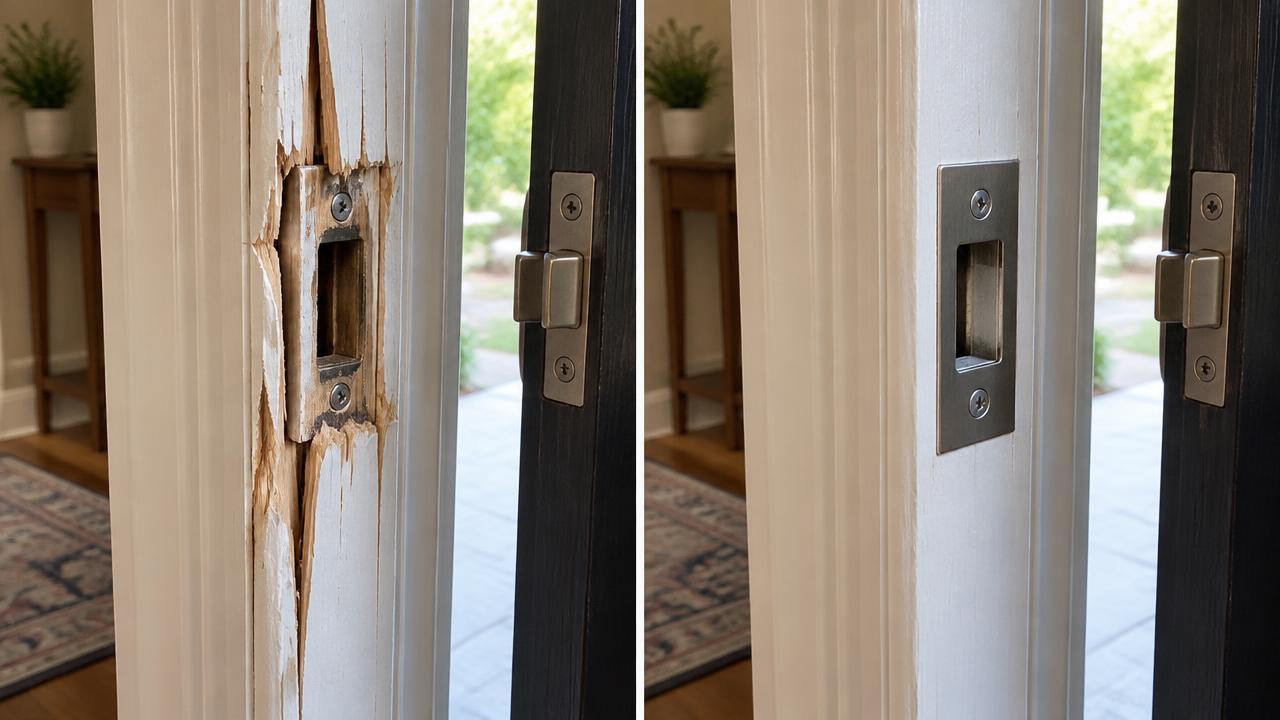
After a break-in everything feels urgent at once. It helps to have an order. Safety, then police, then documentation, then securing the building — permanent repairs come after all of that.
Before you touch anything
- Don't enter if there's any chance someone is still inside
- Call police and get an occurrence or report number — insurers ask for it
- Don't clean up or move damaged hardware until it's been photographed
- Photograph the door, frame, lock, glass and any tool marks, wide and close up
Securing the opening
This is the part that can't wait. Board-ups cover broken glass, temporary strikes and reinforcement bring a split jamb back into service, and replacement cylinders go in where a lock was drilled or snapped. The goal for the first visit is a building that locks tonight.
What insurers typically ask for
Expect to be asked for the police report number, dated photographs of the damage, an itemised invoice for the emergency work, and a quote for the permanent repair. Keep the emergency invoice separate from the permanent repair invoice — it makes the claim cleaner.
Permanent repair, and doing it better than before
- Reinforced strike plates with screws into the framing
- A jamb repair or replacement rather than filler over a split
- Laminated glass where glass was the entry point
- A higher-grade or high-security cylinder on the entry door
- Rekeying everything if keys were taken
Rekey even if nothing looks missing
If keys, key tags or anything showing your address was taken, treat every lock as compromised. Rekeying is fast and it closes the loop.